Door Installation in Glasgow: What to Expect and How to Get It Right
A new door is one of the most visible changes you can make to a Glasgow home. It affects security, insulation, kerb appeal, and the overall impression your property makes. But a well-made door fitted poorly is still a problem – draughts, alignment issues, and reduced security are all consequences of poor installation.
This guide covers what’s involved in professional door installation in Glasgow, what the different door types offer, and what to look for when choosing an installer.
Types of door installation we cover in Glasgow
Composite front doors
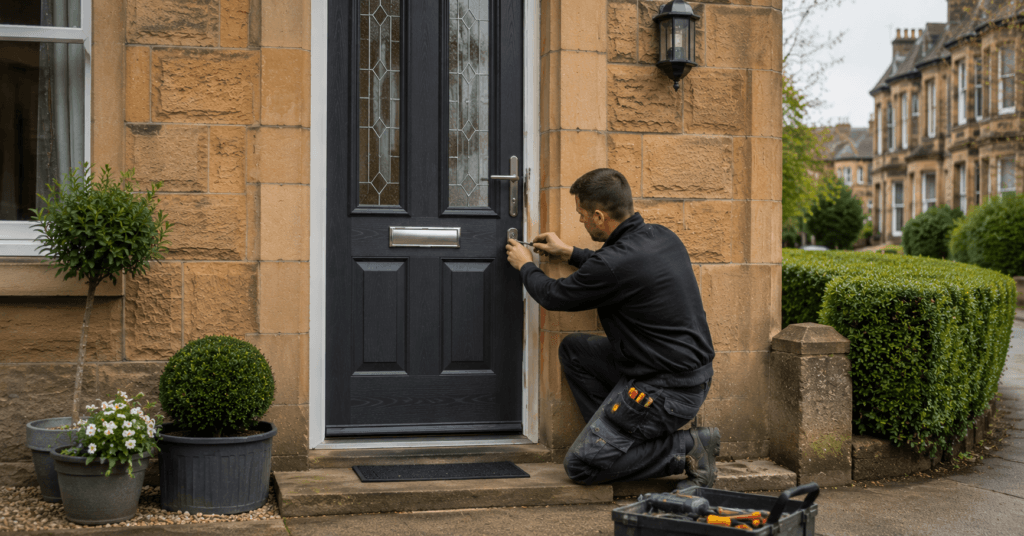
Composite doors are the most popular front door upgrade for Glasgow homeowners. They combine a GRP outer skin with a dense foam core and reinforced frame to produce a door that looks like solid timber but outperforms it on every practical measure – security, insulation, longevity, and maintenance. Installation involves removing the old door and frame, preparing the opening, fitting the new doorframe, hanging the door, sealing all perimeters, and commissioning the locking system.
For more detail on composite doors specifically, visit our Composite Doors Glasgow page.
uPVC doors
uPVC doors are a cost-effective, low-maintenance option well suited to rear entrances, utility access, and situations where budget is the primary consideration. They’re lighter than composite doors but still offer multi-point locking and good thermal performance. Installation is similar to composite – frame out, new frame in, door hung, sealed, and locked off.
Bifold doors
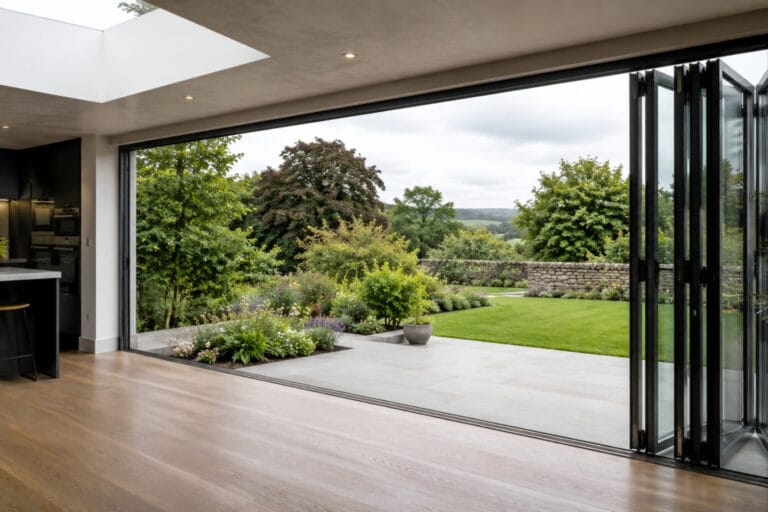
Bifold door installation is a more involved project than a standard door replacement. It typically requires a structural opening to be created or confirmed, a steel or concrete lintel to span the opening, and precise track installation to ensure the doors operate smoothly and seal correctly when closed. Done properly, bifold doors transform a room – opening up a rear wall entirely to connect internal and external space. Done poorly, they leak, stick, and become a source of ongoing frustration.
Visit our Bifold Doors Glasgow page for full detail on what’s involved.
Patio and sliding doors
Sliding patio doors are a space-efficient alternative to bifolds where a full opening isn’t required. Installation involves fitting a precise track system into the floor and head, hanging the panels, and ensuring the seal between the fixed and sliding sections is airtight. Like bifolds, the quality of the track and the precision of the installation have a direct impact on long-term performance.
French doors
French doors – two outward-opening panels creating a wide opening – are a classic choice for garden access in Glasgow homes. They work well in both traditional and contemporary properties. Installation is more straightforward than bifolds, though the opening size and threshold detail need careful attention to avoid water ingress in heavy rain.
Why installation quality matters as much as product quality
This is the point most people underestimate. A composite door with a Ultion cylinder and PAS 24 certification, fitted with a poorly sealed frame and misaligned hinges, will still draught, still flex under shoulder pressure, and still underperform thermally. The door is only as good as the installation.
Specific things that separate a good door installation from a poor one:
- Frame squareness: a frame that isn’t perfectly square will cause the door to bind, not lock smoothly, or leave gaps at the corners of the seal
- Perimeter sealing: the gap between the new frame and the existing opening must be correctly filled and sealed to prevent draughts and water ingress
- Threshold detail: the junction between the door and the floor must be watertight – particularly important for external doors in Glasgow’s wet climate
- Hardware commissioning: multi-point locks need to be adjusted so every bolt engages cleanly without force – this is what the 10-year guarantee is predicated on
What to look for in a Glasgow door installer
The glazing industry has more than its share of high-pressure sales tactics and misleading pricing. Here’s what to look for when choosing an installer in Glasgow:
- FENSA or CERTASS registration: this means the installer can self-certify their work as compliant with building regulations and provide a certificate you’ll need when selling your property
- Written, itemised quote: a proper quote specifies the exact door being supplied, includes all labour, removal of old door, making good, and VAT at the correct 5% residential rate
- No same-day pressure: any installer insisting on a decision before they leave deserves to lose the job
- Verifiable reviews: Google reviews from named customers in the local area are the most reliable indicator of actual installation quality
- A showroom you can visit: being able to see and handle doors in person before committing is a significant advantage
How long does door installation take?
A standard front door replacement – composite or uPVC, single panel – typically takes three to five hours for an experienced team. The property is accessible throughout. Bifold and large patio door installations typically take a full day, and may require a second day if structural work is involved. Your installer should give you a clear time estimate before work begins.
Book a free door installation survey in Glasgow
NuView installs doors across Glasgow and Central Scotland. We offer free, no-obligation home surveys where we’ll assess your existing doors, advise on the right replacement for your property, and provide a clear written quote with no pressure to commit on the day.
You can see our full range of composite, bifold, patio, and French doors at our Glasgow showroom. Contact us to arrange a survey or showroom visit.
Frequently asked questions
Do I need planning permission to replace a door in Glasgow?
In most cases, no. Door replacement on a standard residential property falls under permitted development. If your property is listed or in a conservation area, restrictions may apply – always check with Glasgow City Council’s planning department before committing to a door style or material.
How long does a composite door installation take?
A standard composite front door installation typically takes three to five hours. This includes removing the old door and frame, fitting the new frame, hanging the door, sealing all perimeters, and commissioning the locking system. You’ll have a fully functioning, secured door by the end of the visit.
What guarantee should I expect on door installation?
Look for a minimum 10-year product guarantee from the manufacturer and a separate workmanship guarantee covering the installation. Your installer should also be able to confirm in writing that the work meets current Scottish building standards and you receive a certificate for your records.
Can NuView replace a door in a Glasgow tenement?
Yes. We have experience installing doors in tenement properties across Glasgow. Access, common close considerations, and the specific door configurations common in tenements are all things our installation team are familiar with. A home survey will identify anything specific to your property before work is scheduled.
Is it worth replacing a back door as well as a front door?
Often yes – particularly if the back door is old, draughty, or has a basic lock. Rear doors are one of the most common points of entry for break-ins, and an old uPVC back door with a single-point lock is a meaningful security vulnerability. Replacing front and back at the same time often reduces the per-door cost and ensures the whole property is properly secured.