
Best Windows for Scottish Weather: What to Choose in 2026
Choosing the best windows for Scottish weather is not the same decision as choosing windows in most of the UK. Scotland’s climate is more demanding – colder winters, higher rainfall, stronger winds, and less sunshine – and the windows that perform adequately in southern England may fall short in Glasgow, Stirling, or anywhere exposed to Scotland’s prevailing westerlies. This guide explains what to look for, which materials and specifications perform best in Scottish conditions, and what to prioritise when comparing quotes. The Energy Saving Trust’s window guidance provides a useful reference point for energy ratings and what they mean in practice.
Why Scottish weather demands more from windows
Scotland’s climate creates specific challenges for windows that are worth understanding before making any decisions.
Average winter temperatures in Glasgow and Stirling sit 2 – 5°C below the UK average. Wind exposure is significantly higher, particularly on west and north-facing elevations. Annual rainfall in Glasgow is around 1,150mm – nearly double the UK average. And Scotland experiences more prolonged cold spells than southern England, meaning windows are under sustained thermal stress for longer periods each year.
The practical consequences of poorly specified windows in a Scottish home include cold rooms that are expensive to heat, persistent condensation and associated damp, draughts around frames that no amount of heating overcomes, and premature seal failure in glazing units exposed to significant temperature cycling. The best windows for Scottish weather address all of these directly.
Best window materials for Scottish weather
uPVC windows – best all-round value for Scottish homes
uPVC remains the most popular window material in Scotland for good reason. It is a naturally good insulator, unaffected by moisture, and requires no painting or staining. uPVC does not rot, warp, or corrode – all relevant properties in a wet climate. Modern uPVC windows achieve A or A+ energy ratings comfortably, and the best profiles achieve excellent air and water tightness scores that are directly relevant to Scottish weather conditions.
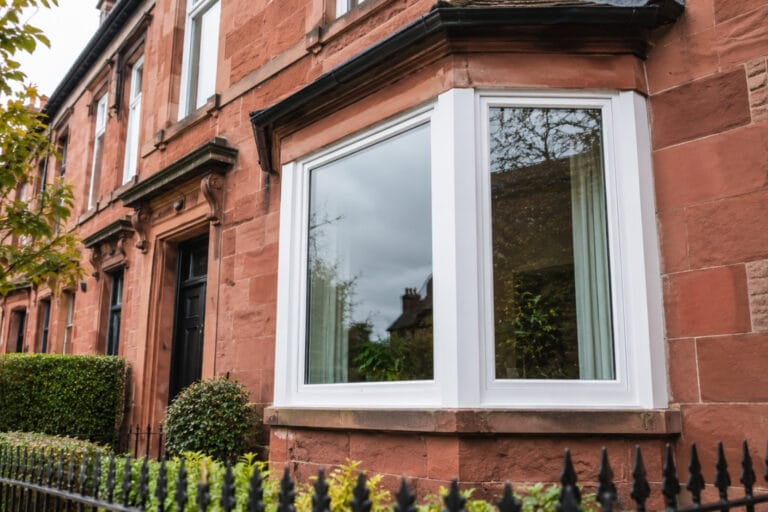
For the majority of Scottish homes – tenements, Victorian semis, 1960s and 70s properties, modern housing estates – well-specified uPVC windows represent the best combination of thermal performance, weather resistance, longevity, and value. They are also available in a wide range of colours and finishes including woodgrain effects that suit older property styles.
Visit our uPVC Windows Glasgow page for more on our uPVC range.
Aluminium windows – best for contemporary properties and large glazed areas
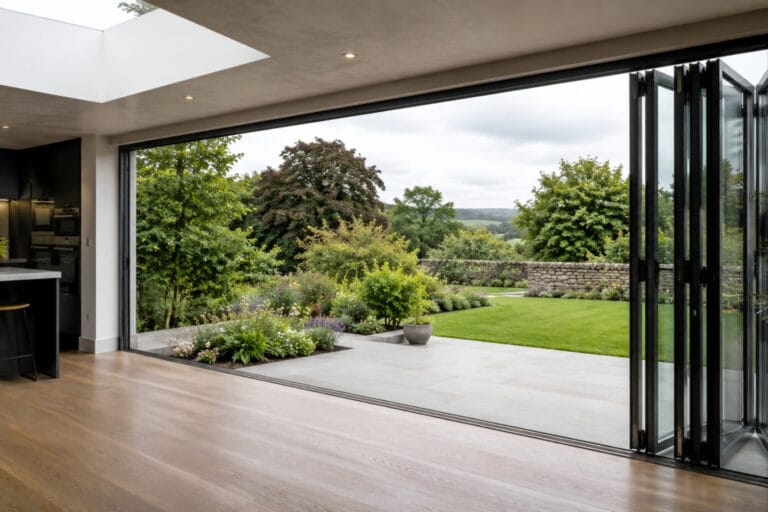
Modern thermally broken aluminium windows are an excellent choice for Scottish weather, particularly for contemporary properties and larger glazed openings. The thermal break – an insulating section within the frame that interrupts the metal – addresses aluminium’s historical weakness as a heat conductor. Quality thermally broken aluminium windows achieve A or A+ ratings equivalent to good uPVC.
Aluminium’s specific advantages in Scottish conditions include exceptional structural rigidity – important for larger window openings where frame flex under wind pressure can compromise sealing – and outstanding colour stability. Powder-coated aluminium finishes hold their colour far better than uPVC in Scotland’s UV-limited but rain-heavy environment, and the material has a lifespan of 40 – 50 years versus 20 – 25 years for uPVC.
Visit our Aluminium Windows Glasgow page for more detail.
Timber windows – best for listed buildings and period properties
Timber remains the only acceptable material for many listed buildings and conservation area properties in Scotland. Modern engineered timber windows – using laminated timber rather than solid wood – are significantly more dimensionally stable than traditional softwood frames and perform well with modern double or triple glazing units. However, timber requires periodic maintenance – painting or staining every 5 – 8 years – and is more susceptible to moisture ingress if maintenance lapses. In Scotland’s wet climate, this demands more attention than in drier parts of the UK.
Best glazing specification for Scottish weather
The frame material matters, but the glazing specification has the biggest single impact on how a window performs thermally. Here is what to look for when choosing the best windows for Scottish weather.
Double glazing specification
For Scottish conditions, specify as a minimum:
- 4-16-4mm configuration: 4mm glass, 16mm cavity, 4mm glass – the wider cavity improves insulation compared to older 4-12-4 units
- Argon gas fill: argon is a better insulator than air and is standard on quality units – always confirm it is included
- Low-E coating: a microscopically thin metallic coating on the glass that reflects heat back into the room – significantly improves the U-value and reduces condensation on the inner pane
- Warm edge spacer bar: the spacer bar around the edge of the unit affects heat loss at the glass edge – warm edge spacers significantly outperform traditional aluminium spacers in cold climates
This specification typically achieves a U-value of 1.0 – 1.2 W/m²K and an A or A+ Window Energy Rating. It is the minimum worth specifying for a Scottish home in 2026.
Triple glazing – worth considering for exposed Scottish locations
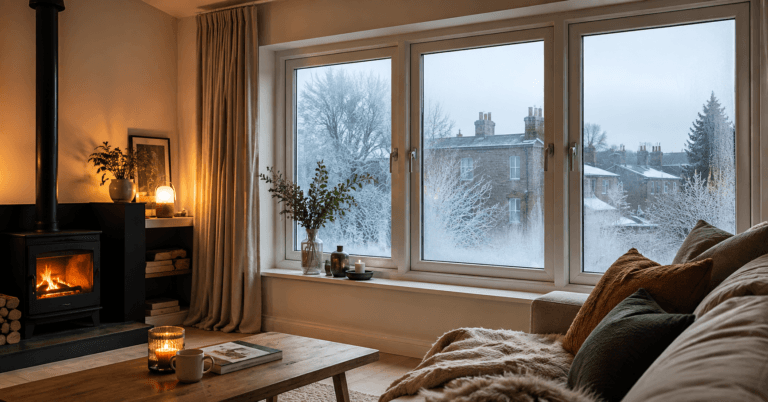
Triple glazing adds a third pane and a second gas-filled cavity, typically achieving U-values of 0.6 – 0.8 W/m²K. For Scottish homes in exposed locations – north or east-facing elevations, properties near the coast or in elevated positions, rooms that have persistently failed to stay warm with double glazing – triple glazing earns its premium. The additional cost of 20 – 40% over double glazing is most justified when you are replacing all windows in one project and plan to stay in the property long term.
Best window styles for Scottish homes
Casement windows
The most common and cost-effective style. Side-hung or top-hung sashes open outward on hinges. Casement windows seal well when closed and suit the majority of Scottish property types from modern housing estates to Victorian semis. The flush casement profile – where the sash sits flush with the outer frame rather than overlapping it – gives a cleaner contemporary look and is increasingly popular on both modern and traditional properties.
Vertical sliders – sash and case
The traditional window style for Glasgow and Edinburgh tenements, Victorian terraces, and Georgian properties. Vertical sliders – where two sashes slide up and down within the frame – are the correct choice for period properties where maintaining the original window character matters. Modern uPVC and aluminium vertical sliders replicate the traditional profile well and outperform the original timber versions thermally. In conservation areas or listed buildings, timber vertical sliders are often required.
Tilt and turn windows
Tilt and turn windows offer two opening modes – tilting inward at the top for ventilation, or swinging fully inward for cleaning and emergency egress. The inward-opening design is particularly useful for upper floor windows where external cleaning is impractical, which is relevant for Glasgow tenements and multi-storey properties. They also seal exceptionally well when closed, making them a strong choice for exposed elevations.
What to look for when comparing window quotes in Scotland
When comparing quotes for the best windows for Scottish weather, ask for the following on every quote:
- The U-value of the glazing unit – not just the frame, the complete unit. Target 1.2 W/m²K or better for double glazing.
- The Window Energy Rating – A or A+ as a minimum for a Scottish home
- Whether argon fill and Low-E coating are included – these should be standard, not upgrades
- The spacer bar type – warm edge spacer should be specified
- Air and water tightness ratings – relevant for exposed Scottish locations
- FENSA or CERTASS registration – confirms the installer can self-certify building regulation compliance
Any installer who cannot or will not provide these details is either not specifying to the right standard or is not comfortable being compared on specification. Both are warning signs.
See windows in our Glasgow and Stirling showrooms
The best way to understand the difference between window specifications is to see and handle them in person. NuView’s Glasgow and Stirling showrooms have a wide range of uPVC and aluminium windows on display, including different profile styles, colour options, and glazing specifications. Our team gives honest advice on what makes sense for your specific property and budget – with no pressure to commit on the day.
Visit our uPVC Windows Glasgow page or our Stirling showroom page for more, or contact us to arrange a free no-obligation home survey across Glasgow, Stirling, and Central Scotland.
Frequently asked questions about the best windows for Scottish weather
Is triple glazing worth it in Scotland?
For many Scottish homes, yes – particularly for exposed elevations, north or east-facing rooms, and properties where double glazing has not resolved persistent cold or draught problems. The improvement over well-specified double glazing is meaningful but incremental. The stronger case for triple glazing in Scotland is comfort – eliminating cold radiant surfaces and draughts – rather than energy savings alone. For a full window replacement project where you plan to stay long term, triple glazing is worth serious consideration.
What is the most weather-resistant window frame material in Scotland?
All three main materials – uPVC, aluminium, and timber – perform well in Scottish weather when correctly specified and installed. uPVC is unaffected by moisture and requires no maintenance. Aluminium is structurally rigid, colour-stable, and extremely durable. Timber performs well when maintained but requires more attention in Scotland’s wet climate than in drier parts of the UK. For most Scottish homeowners, uPVC offers the best balance of performance, longevity, and value.
Do I need special windows for a west-facing elevation in Scotland?
West-facing elevations in Scotland receive the most wind-driven rain and benefit most from windows with high weather tightness ratings. When specifying windows for a west-facing wall, ask your installer about the window’s water tightness classification – Class 8A or above is appropriate for exposed Scottish locations. Good quality casement and tilt-and-turn windows from reputable manufacturers achieve this comfortably.
How often do window seals fail in Scotland’s climate?
Quality sealed double-glazed units carry a 10-year guarantee against seal failure and should last considerably longer in practice – 20 years or more is realistic for a quality unit correctly installed. Scotland’s temperature cycling does put more stress on seals than milder climates, which makes installation quality particularly important. A poorly fitted unit with inadequate edge sealing will fail faster than a well-fitted equivalent regardless of the product quality.
What window style is best for a Glasgow tenement?
Vertical sliders – sash and case style – are the traditional and most appropriate window for Glasgow tenements, both aesthetically and in terms of maintaining property character. Modern uPVC and aluminium vertical sliders replicate the traditional profile well and outperform original timber sash windows thermally. If your tenement is in a conservation area or the building is listed, check with Glasgow City Council before committing to a material – timber may be required.