Energy Efficient Windows in Scotland: A Practical Guide
Energy efficient windows are one of the most effective improvements you can make to a Scottish home. Windows are one of the main routes for heat loss in any property – particularly older homes with single glazing or failed double glazing – and upgrading them has a direct impact on comfort, energy bills, and carbon footprint.
This guide explains how window energy efficiency is measured, what the ratings actually mean, how much you can realistically save, and which window types make most sense for Scottish homes.
How is window energy efficiency measured?
There are two main measurements used to assess how well a window performs thermally.
U-value
The U-value measures how much heat passes through the window per square metre per degree of temperature difference between inside and outside. The lower the U-value, the better the insulation. Single-glazed windows typically have a U-value of around 5.0 W/m²K. Standard double glazing achieves around 1.2 – 1.6. High-performance triple glazing can achieve 0.6 – 0.8. For context, a well-insulated cavity wall achieves around 0.3.
Window Energy Rating (WER)
The Window Energy Rating is an A++ to G scale used by the British Fenestration Rating Council (BFRC) to give an overall energy performance score for complete window units – glass and frame combined. The rating takes into account heat loss (U-value), solar heat gain, and air leakage.
- A++ and A+: highest performance, recommended for exposed Scottish locations
- A and B: good performance, suitable for most Scottish homes
- C and below: acceptable but not recommended for new installations
Most reputable installers supply A-rated windows as standard. If a quote doesn’t specify the WER, ask for it.
Why energy efficiency matters more in Scotland
Scotland’s climate makes thermal performance a more pressing concern than in southern England. Average winter temperatures in Glasgow and Stirling are 2 – 5°C colder than London, wind exposure is considerably higher, and rainfall is substantially above the UK average. For a Scottish home, windows that merely meet the minimum standard aren’t necessarily adequate – particularly for north or east-facing elevations, exposed properties, and older housing stock with limited wall insulation.
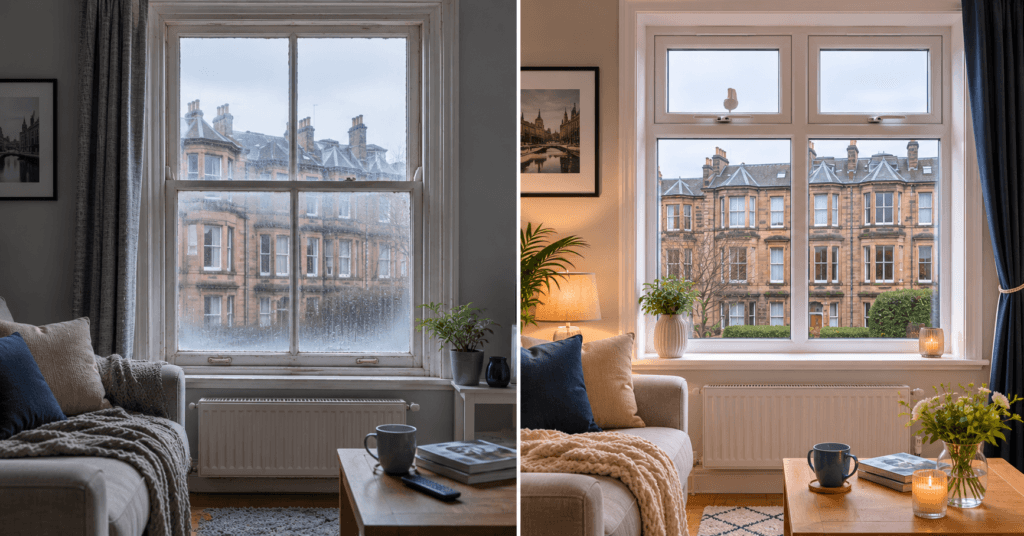
The practical consequences of poor window performance in Scotland are significant – rooms that are genuinely cold and uncomfortable to use in winter, condensation and associated damp problems, and heating systems working harder and costing more than they should.
How much can energy efficient windows save on bills?
The saving depends on what you’re replacing. As a guide:
- Replacing single glazing with A-rated double glazing: the Energy Saving Trust estimates savings of £150 – £200 per year in a typical semi-detached home
- Replacing old or failed double glazing with modern A-rated units: typically £30 – £80 per year, as modern double glazing is already reasonably efficient
- Upgrading from double to triple glazing: an additional £50 – £100 per year on top of standard double glazing savings
These are national averages. Scottish homes, with their longer, colder heating seasons, tend to see savings at the higher end of these ranges. Over a 20-25 year window lifespan, the cumulative saving is substantial.
uPVC vs aluminium – which is more energy efficient?
This is one of the most common questions, and the answer is more nuanced than many people expect.
uPVC is a naturally good insulator and provides an inherently thermally efficient frame. Standard double-glazed uPVC windows achieve A or A+ ratings comfortably. Aluminium, by contrast, is an excellent conductor of heat – which historically made it a poor thermal performer. Modern aluminium windows address this with a thermal break – a section of insulating material that interrupts the metal frame – and quality thermally broken aluminium windows achieve equivalent energy ratings to uPVC.
In practice, for most domestic applications, both materials can achieve A or A+ ratings. The choice between uPVC and aluminium is better made on cost, aesthetics, and lifespan than on energy efficiency alone. The glazing specification – the U-value of the glass unit and whether it includes Low-E coating and argon fill – has a bigger impact on overall thermal performance than the frame material.
What glazing specification should I ask for?
For a Scottish home in 2026, a reasonable minimum specification for new windows is:
- Double glazing: 4-16-4mm configuration with argon fill and Low-E coating – this typically achieves a U-value of around 1.0 – 1.2 W/m²K and an A or A+ rating
- Triple glazing: 4-12-4-12-4mm configuration with argon or krypton fill and Low-E coatings on two surfaces – typically achieves 0.6 – 0.8 W/m²K
Any reputable installer should be able to provide the U-value and WER of the specific units they’re supplying. If they can’t, that’s a warning sign.
ECO4 funding for energy efficient windows
The ECO4 (Energy Company Obligation) scheme provides funding for energy efficiency improvements in eligible households. Window upgrades can be included where a property qualifies based on household income and current energy performance. Eligibility is assessed through your energy supplier or via the government’s eligibility checker at gov.uk.
Local councils in Scotland also sometimes run additional schemes – Warmer Homes Scotland is worth checking for eligible households. Be cautious of companies cold-calling or door-knocking to offer windows through government schemes – always verify eligibility independently.
Getting energy efficient windows in Glasgow and Stirling
NuView supplies and installs A-rated uPVC and aluminium windows across Glasgow and Stirling. We’ll advise on the right specification for your property and provide a clear written quote with no pressure to commit on the day.
Visit our uPVC Windows Glasgow page or our Aluminium Windows Glasgow page for more detail, or contact us to arrange a free no-obligation home survey.
Frequently asked questions
What does A-rated double glazing mean?
A-rated double glazing has been assessed by the British Fenestration Rating Council and achieved an A rating on the Window Energy Rating scale. This takes into account heat loss, solar heat gain, and air leakage across the whole window unit – glass and frame combined. A-rated windows represent good overall thermal performance and are the standard specification recommended for Scottish homes.
Is triple glazing worth it for energy efficiency in Scotland?
For many Scottish homes, yes – particularly for exposed elevations, north or east-facing rooms, and properties where double glazing has not resolved persistent cold or draught issues. The improvement over good quality double glazing is real but incremental – expect an additional £50 – £100 per year in energy savings, plus meaningful improvements in comfort and condensation reduction.
What is a Low-E coating on window glass?
Low-emissivity (Low-E) glass has a microscopically thin metallic coating that reflects heat back into the room, reducing the amount of heat that passes through the glass to the outside. It significantly improves the U-value of a glazing unit without affecting how much light comes through. It’s a standard feature on most quality double-glazed windows and should be included in any A-rated unit.
Can I get funding to replace windows in Scotland?
Potentially. The ECO4 scheme provides funding for eligible households based on income and energy performance. Warmer Homes Scotland provides additional support in some cases. Eligibility must be verified through your energy supplier or via gov.uk – be wary of any company that cold-calls or door-knocks claiming to offer free windows through government schemes.
How quickly will new windows pay for themselves?
The payback period depends on what you’re replacing and what you’re replacing it with. Replacing single glazing with A-rated double glazing in a Scottish home typically pays back in 10 – 15 years through energy savings alone, with a significantly longer ongoing benefit. The comfort improvement – eliminating cold rooms, draughts, and condensation – is immediate and often the more compelling benefit for homeowners making the decision.