Anti-Snap Locks and Door Security: The Complete Guide
Your front door is the most common way a burglar tries to enter your home, and the lock is the single most important line of defence. Yet most people never think about their door lock security until something goes wrong. The uncomfortable truth is that many homes across Scotland are fitted with lock cylinders that a determined intruder can defeat in under a minute, using techniques that are widely known and require no specialist skill. The single most important upgrade most homeowners can make is fitting anti-snap locks. This guide explains how door locks are attacked, which lock standards genuinely protect your home, and how to make sure your doors are as secure as they should be.
Every NuView composite door comes with an Ultion anti-snap cylinder and multi-point locking as standard, from £1,450 fitted including VAT. See our composite doors →
Why door lock security matters more than people realise
The majority of break-ins are opportunistic rather than sophisticated. Burglars favour speed, quiet, and low risk, and a weak lock cylinder offers all three. The most common method of forced entry through a uPVC or composite door is not brute force, smashing, or drilling. It is a technique called lock snapping, and it exploits a specific weakness in the cheap euro cylinder locks fitted to millions of doors. Understanding this is the foundation of good door lock security, because it tells you exactly what your lock needs to resist.
Good door lock security is not about having the most expensive door. It is about having the right cylinder, the right locking mechanism, and the right standards, correctly installed. A basic door with an excellent cylinder can be more secure than a premium door fitted with a weak one.
How burglars actually attack door locks
To choose the right lock, it helps to understand the three main ways a euro cylinder is attacked. These are the techniques that quality locks are specifically designed to defeat.
Lock snapping
Lock snapping is the most common and most serious threat to door lock security in the UK. The attacker grips the section of the cylinder that protrudes beyond the door handle and snaps it in two using force or a simple tool. Once the outer section breaks away, the internal mechanism is exposed and the lock can be turned and opened in seconds. Standard euro cylinders have a weak point in the centre that makes this alarmingly easy. Anti-snap cylinders are engineered with sacrificial sections and hardened cores so that even if the outer part snaps, the lock remains secure.
Lock picking
Lock picking involves manipulating the internal pins of the cylinder with specialist tools to open it without the key. While less common than snapping in opportunistic break-ins, it is a genuine risk with cheaper cylinders that have simple pin configurations. Anti-pick cylinders use complex pin designs, false notches, and hardened components that make picking impractically slow and difficult.
Lock bumping
Lock bumping uses a specially cut key, called a bump key, which is inserted and struck sharply to momentarily jolt the internal pins into an open position. It is a surprisingly effective technique against standard cylinders and requires little skill. Anti-bump cylinders are designed with modified pin arrangements and mechanisms that resist this jolting action.
Drilling
A more forceful method, drilling destroys the cylinder mechanism to allow it to be turned. Quality high-security cylinders include hardened steel anti-drill plates and pins that resist or defeat drilling attempts.
The lock standards that actually matter
When assessing door lock security, certain standards and markings tell you a cylinder has been independently tested to resist these attacks. These are the things to look for, and the ones a good installer will specify as standard.
TS007 3-star rating for anti-snap locks
TS007 is a British Kitemark standard for door cylinders, rated in stars. The system works in two ways. A cylinder can achieve 3 stars on its own, meaning it has been tested to resist snapping, picking, bumping, and drilling to the highest level. Alternatively, a 1-star cylinder can be combined with 2-star security hardware, such as a security handle or escutcheon, to reach the same overall 3-star protection. For strong door lock security, aim for a full 3-star cylinder or a certified 1-star plus 2-star combination.
Sold Secure Diamond
The Sold Secure Diamond standard, administered by the Master Locksmiths Association, is one of the most rigorous independent tests a cylinder can pass. A cylinder carrying the Sold Secure Diamond mark has been subjected to sustained, determined attack by expert testers and resisted it. This is the mark of a genuinely high-security cylinder and is well worth looking for.
Kitemark and BS EN 1303
The BSI Kitemark on a cylinder, and compliance with BS EN 1303, indicate the lock meets recognised British and European standards for quality and performance. While these are baseline quality indicators rather than the highest security markers on their own, they are a sign the product is properly manufactured and tested.
Ultion locks and the gold standard
Among high-security cylinders, Ultion has established itself as one of the most trusted names in door lock security. The Ultion cylinder is designed with an additional hidden defence: if an attacker attempts to snap the lock, a concealed lockdown mechanism triggers, engaging a hardened steel bolt that locks the cylinder even more securely rather than allowing it to fail. In effect, an attempted snap attack makes the lock harder to defeat, not easier.
Ultion cylinders carry both the TS007 3-star rating and the Sold Secure Diamond standard, placing them at the top tier of domestic lock security. They also come with security guarantees that reflect the manufacturer’s confidence in the product. For homeowners who want genuine peace of mind, an Ultion cylinder is one of the strongest choices available. You can read more about how the Ultion mechanism works on the official Ultion website.
Beyond the cylinder: the whole locking system
A high-security cylinder is essential, but door lock security is about the complete system, not just one component. Several other elements work together to keep a door secure.
Multi-point locking
Quality uPVC and composite doors use a multi-point locking mechanism that engages bolts at several points along the door edge when the key is turned, typically hooks, deadbolts, and rollers. This spreads the locking force across the whole door and makes it far harder to force than a single-point lock. Always ensure your door has a well-made multi-point mechanism and that it is engaged fully by lifting the handle and turning the key, not just closing the door.
Security handles and escutcheons
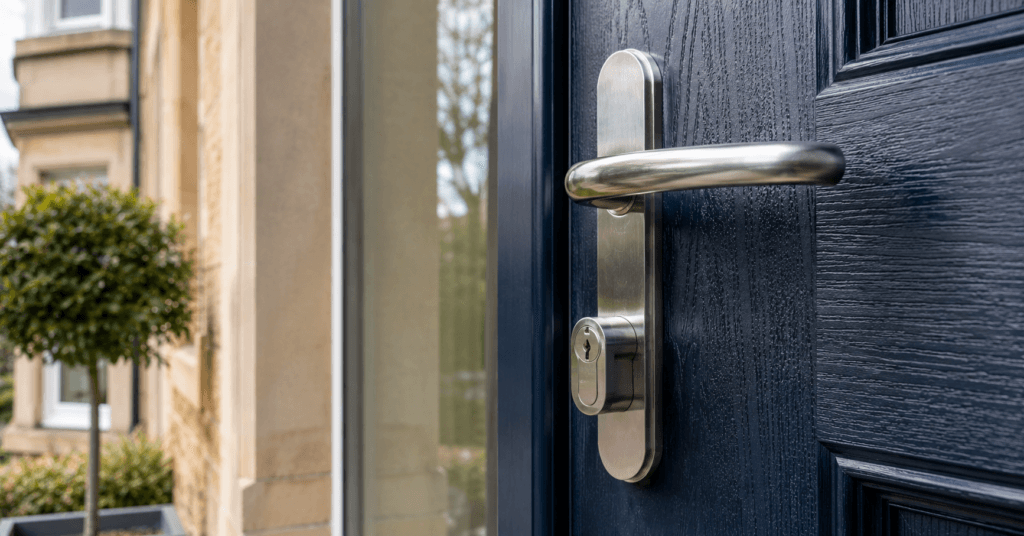
Security door furniture, such as reinforced handles and escutcheon plates, protects the cylinder from being gripped, drilled, or attacked. When paired with the right cylinder, this hardware contributes to the overall TS007 rating and adds a meaningful layer of protection.
Hinge bolts and reinforcement
On outward-opening doors, hinge bolts prevent the door being lifted off its hinges. Reinforced door frames and keeps also resist the door being kicked or forced open. A secure door is a system where every component is up to standard.
PAS 24: the whole-door security standard
While cylinder standards address the lock, PAS 24 is the enhanced security standard for a complete doorset. A door that carries PAS 24 certification has been tested as a whole unit, door, frame, lock, and hardware together, against a series of physical attacks designed to replicate real burglary attempts. When investing in a new door, choosing one with PAS 24 certification gives you confidence that the entire assembly, not just the lock, meets a recognised security standard. This is the benchmark to look for in any quality replacement door.
Smart locks and modern door security
Smart locks are an increasingly popular addition to door lock security, offering keyless entry via phone, keypad, or fingerprint, along with features like time-limited access codes and entry notifications. When considering a smart lock, the same principle applies: the underlying mechanical security must be sound. The best approach is a smart locking solution built on a high-security cylinder and multi-point mechanism, so you gain the convenience of smart access without compromising the physical protection underneath. Smart locks are a complement to good mechanical security, not a replacement for it.
Checking your own door lock security
You can carry out a basic assessment of your own door lock security with a few simple checks:
- Look at your cylinder. Does it protrude noticeably beyond the handle? A protruding cylinder is far easier to snap. It should sit as flush as possible.
- Check for a 3-star TS007 marking or a Sold Secure Diamond mark on the cylinder or its documentation. If you cannot find one, your cylinder may not be snap-resistant.
- Confirm your door has a multi-point locking mechanism and that you always lift the handle and turn the key to engage it fully.
- Consider the age of your locks. Older cylinders fitted before anti-snap standards became common are a particular risk and are usually straightforward and affordable to upgrade.
Upgrading a vulnerable cylinder to a high-security anti-snap cylinder is one of the most cost-effective home security improvements you can make, and it does not require replacing the whole door.
Do anti-snap locks affect your home insurance?
This is an area many homeowners overlook. Your door locks can have a direct bearing on your home insurance, both on the premium you pay and on whether a claim is paid out after a break-in. Most insurers expect external doors to be fitted with locks that meet a recognised security standard, and some policies specify this in the small print as a condition of cover.
For timber doors, insurers commonly require a mortice deadlock meeting BS 3621. For uPVC and composite doors, the expectation is increasingly for anti-snap cylinders rated to TS007 3-star or Sold Secure Diamond, particularly given how well known lock snapping has become. If a burglar defeats a sub-standard lock that did not meet your policy’s requirements, there is a real risk the insurer could reduce or reject the claim. It is always worth checking your policy wording and confirming your locks meet the stated standard.
Beyond simply meeting the conditions, fitting anti-snap locks can sometimes help with your premium, as demonstrably better security lowers the risk an insurer is underwriting. Even where it does not reduce the cost directly, it protects you where it matters most, by making sure a claim cannot be challenged on the grounds of inadequate locks. If you are upgrading your locks or fitting a new door, keep the certification paperwork safe, as your insurer may ask to see it.
Getting expert advice on door security in Glasgow and Stirling
Whether you are considering a new door or want to improve the security of your existing one, expert advice makes all the difference. NuView fits high-security composite and uPVC doors across Glasgow, Stirling and Scotland, specified with anti-snap cylinders and multi-point locking as standard, and we can advise on the right level of security for your home. Explore our composite doors in Glasgow and composite doors in Stirling, or contact us for honest advice and a free survey.
Frequently asked questions about door lock security
What is the most secure type of door lock?
For a uPVC or composite door, the most secure setup is a TS007 3-star or Sold Secure Diamond anti-snap euro cylinder, combined with a multi-point locking mechanism and security door furniture. A cylinder such as the Ultion, which carries both top ratings and has an additional anti-snap lockdown mechanism, represents one of the highest levels of domestic door lock security available.
What is lock snapping and how do I prevent it?
Lock snapping is a technique where a burglar snaps a euro cylinder in two to expose and defeat the mechanism, often in seconds. It is the most common method of forced entry through uPVC and composite doors. You prevent it by fitting an anti-snap cylinder rated to TS007 3-star or Sold Secure Diamond, which is engineered to remain secure even if the outer section is snapped.
How do I know if my door lock is anti-snap?
Check the cylinder or its accompanying documentation for a TS007 3-star marking or a Sold Secure Diamond mark. You can also look at whether the cylinder protrudes beyond the handle, as a flush-fitting cylinder is harder to grip and snap. If you are unsure, a locksmith or reputable door installer can assess it for you. Older cylinders often predate anti-snap standards and are worth upgrading.
Can I upgrade my lock without replacing the whole door?
Yes. Upgrading the euro cylinder to a high-security anti-snap cylinder is a straightforward and affordable job that significantly improves your door lock security without replacing the door itself. It is one of the most cost-effective home security upgrades available, and a reputable installer or locksmith can carry it out quickly.
Are smart locks secure?
Smart locks can be secure, provided the underlying mechanical lock is sound. The best smart locking solutions are built on a high-security cylinder and multi-point mechanism, giving you keyless convenience without sacrificing physical protection. A smart lock should complement strong mechanical security, not replace it. Always ensure the cylinder beneath any smart system meets recognised anti-snap standards.
What is PAS 24 and why does it matter?
PAS 24 is an enhanced security standard that tests a complete doorset, the door, frame, lock, and hardware together, against physical attacks that replicate real burglary attempts. A door with PAS 24 certification has proven it meets a recognised whole-door security benchmark, rather than just having a good lock. When buying a new door, PAS 24 certification is a strong indicator of genuine security.
Do anti-snap locks affect home insurance?
They can. Many insurers expect external doors to have locks meeting a recognised standard, often BS 3621 for timber doors and anti-snap TS007 3-star or Sold Secure Diamond cylinders for uPVC and composite doors. If a break-in occurs through a lock that did not meet your policy’s conditions, the insurer could reduce or reject the claim. Fitting anti-snap locks protects your cover and can sometimes help with the premium. Always check your policy wording.
Looking for a more secure front door? See our composite doors → or design your own →